- Home
- Dentures vs implants
Patient guide · Tooth replacement
Dentures vs dental implants: how to choose
How they feel, how they’re cared for, and who each suits.
- Reviewed by
- Dr. Malvika S. Roy, MDS
- Where
- Safal Park, Sector 25, Nerul East
- Before treatment
- Written estimate for each option
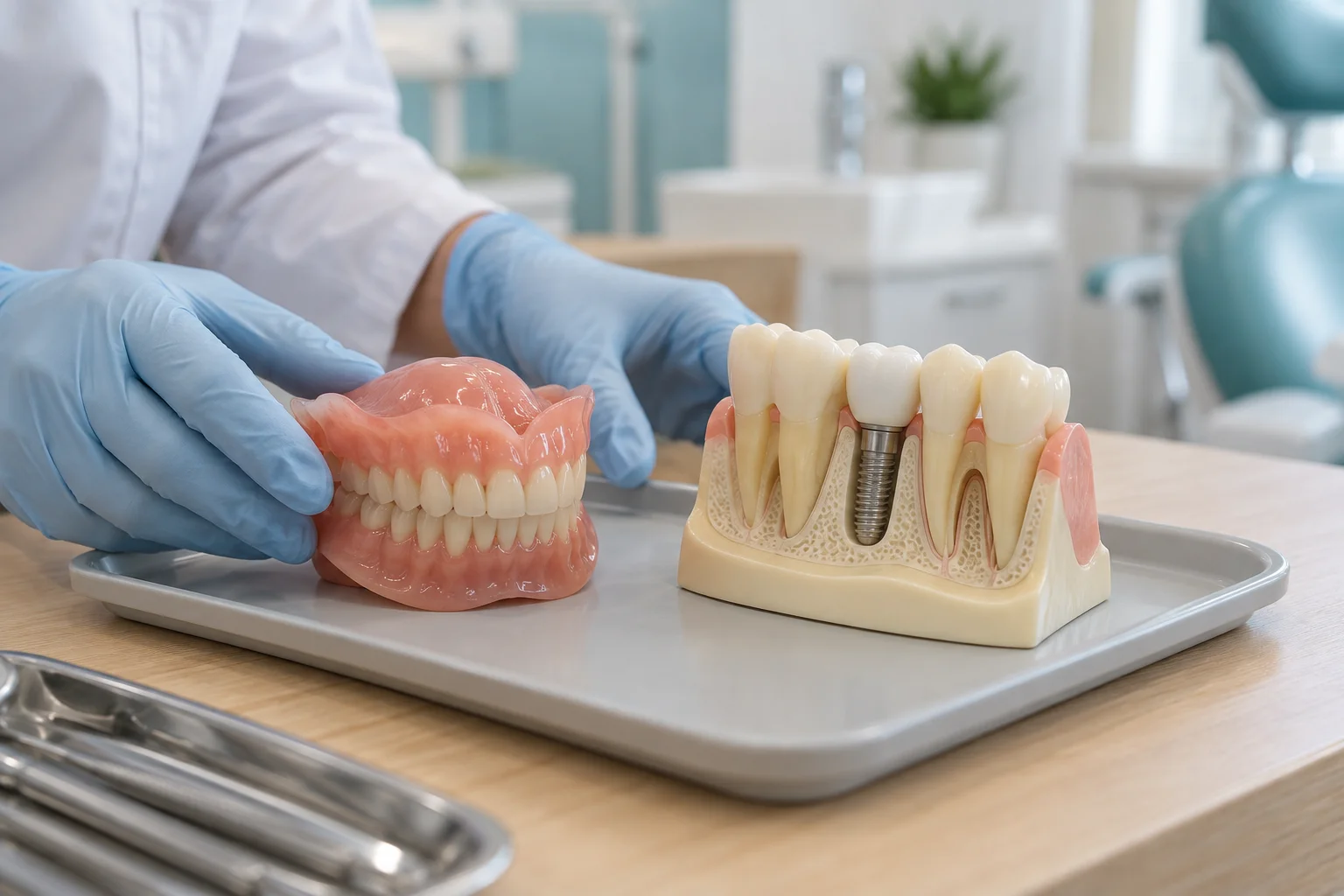
Dentures and implants, side by side
General differences. Your own mouth, health and priorities decide which applies to you.
| Aspect | Removable dentures | Dental implants |
|---|---|---|
| Stability while eating | Rest on the gums and may move with hard or sticky foods; many people adapt with practice and, sometimes, adhesive. | Fixed to the jawbone, so they generally feel steadier for biting and chewing. |
| Surgery needed | No surgery in most cases; extractions or minor gum procedures may be needed first. | A minor surgical procedure under local anaesthesia places each implant; bone grafting is sometimes needed. |
| Visits and time | Usually a few visits over some weeks for impressions, trials and fitting. | Typically spread over a few months, as the implant needs time to bond with the bone before the final teeth are fitted. |
| Bone and health considerations | Can be made for most people, including where bone is limited; the jawbone may continue to shrink over time. | Need enough healthy bone, or grafting; uncontrolled diabetes, smoking and some medicines may affect suitability and healing. |
| Maintenance | Removed daily for cleaning; relines or remakes may be needed as the gums change. | Brushed and cleaned like natural teeth, with regular check-ups; gum health around implants needs attention. |
| Cost drivers | Material, number of teeth replaced and any preparatory treatment. | Number of implants, bone grafting, scans, type of crown or bridge and the components used. |
| Suitability | Often suits people who prefer to avoid surgery, have limited bone or need a simpler, quicker option. | Often suits people with adequate bone and good general health who want fixed teeth. |
There is also a middle path: implant-supported dentures, where a few implants hold a removable or fixed denture in place.
Which may suit whom
These are starting points for a conversation, not a diagnosis.
You would rather avoid surgery
A well-made complete or partial denture may be the more comfortable choice.
Your current denture keeps slipping
Implant-supported dentures, held by two or more implants, may improve stability without replacing every tooth with an implant.
You are missing one or a few teeth
Implants avoid relying on neighbouring teeth; partial dentures and bridges are alternatives worth comparing.
You have medical conditions or take certain medicines
Some conditions call for caution with surgery; your physician and prosthodontist can decide together.
You want the quickest route to teeth
Dentures are usually ready sooner; temporary options during implant treatment can also be discussed.
Find options for your missing teeth
Tap the missing teeth on the chart to see the replacement options commonly discussed for that pattern.
Options a prosthodontist may discuss
- Dental implant(s)A titanium or zirconia root placed in the jaw, topped with a crown — if bone and general health allow.
- Tooth-supported bridgeCrowns on the neighbouring teeth hold a replacement tooth across the gap; those teeth are reshaped.
A starting point for your consultation, not a diagnosis. Gum health, bone, bite, medical history and budget decide what is actually suitable.
What affects the cost
An estimate is given after examination and, for implants, imaging. No two plans are the same.
How many teeth are being replaced
A single tooth, several teeth or a full arch each need a different approach.
Bone and gum condition
Grafting, extractions or gum treatment before the main work can add stages.
Imaging and planning
Implant planning usually needs a 3D scan (CBCT); dentures may not.
Materials and components
The type of denture base, artificial teeth, implant system and crown material all play a part.
Upkeep over time
Denture relines and replacements, and implant maintenance visits, are part of the long-term picture.
Prosthodontist's hand holding a jaw model with an implant, patient's hand reaching to touch it, a printed OPG X-ray on the desk between them. Daylight at the Safal Park clinic, shallow depth, faces out of frame.
Portrait
Dr. Malvika S. Roy
MDS (Prosthodontics) · Prosthodontist & Implantologist
Consults at Shop 24, Safal Park, Nerul EastQuestions about dentures vs implants
Straight answers to what patients ask us most. Still unsure? Just ask.
Are implants always better than dentures?
No. Implants feel steadier for many people, but they need surgery, enough bone and more time. A good denture can be the right choice, depending on your health, mouth and preferences.
Am I too old for implants?
Age alone is not usually the deciding factor. General health, bone, healing and your ability to keep the area clean matter more, and these are assessed at consultation.
Can I switch from dentures to implants later?
Often, yes, though bone may shrink over years without teeth, which can mean grafting becomes necessary. An assessment and scan will show what is possible.
Does getting an implant hurt?
The procedure is done under local anaesthesia, so you should not feel pain during it. Some soreness and swelling afterwards is common for a few days and is usually managed with simple medicines.
I have diabetes. Can I still have implants?
Many people with well-controlled diabetes may be suitable, but healing can be affected when sugar control is poor. Your recent reports, and sometimes your physician's input, help decide.
Related treatments
This page is general information reviewed by the clinic’s doctors. It is not a diagnosis; suitability, results and costs vary by patient. In an emergency call 112.
Book your dental consultation
Call or WhatsApp the clinic at Sankalp CHS, Shop No. 24, Safal Park, Sector 25, Nerul East. We’ll confirm a time that suits you.